Storage Container Rental Costs in 2026: Rates, Fees & How to Save
A rented storage container, or conex in trade shorthand, gives you lockable, ground-level storage set down right where the work is, with no loading dock or self-storage run required. The catch is that the per-month figure a supplier rattles off is almost never your real cost. This breaks down what a 2026 rental actually runs by size, term, and how hard you'll use it, including the delivery and site-prep charges that tend to surface after the headline rate.
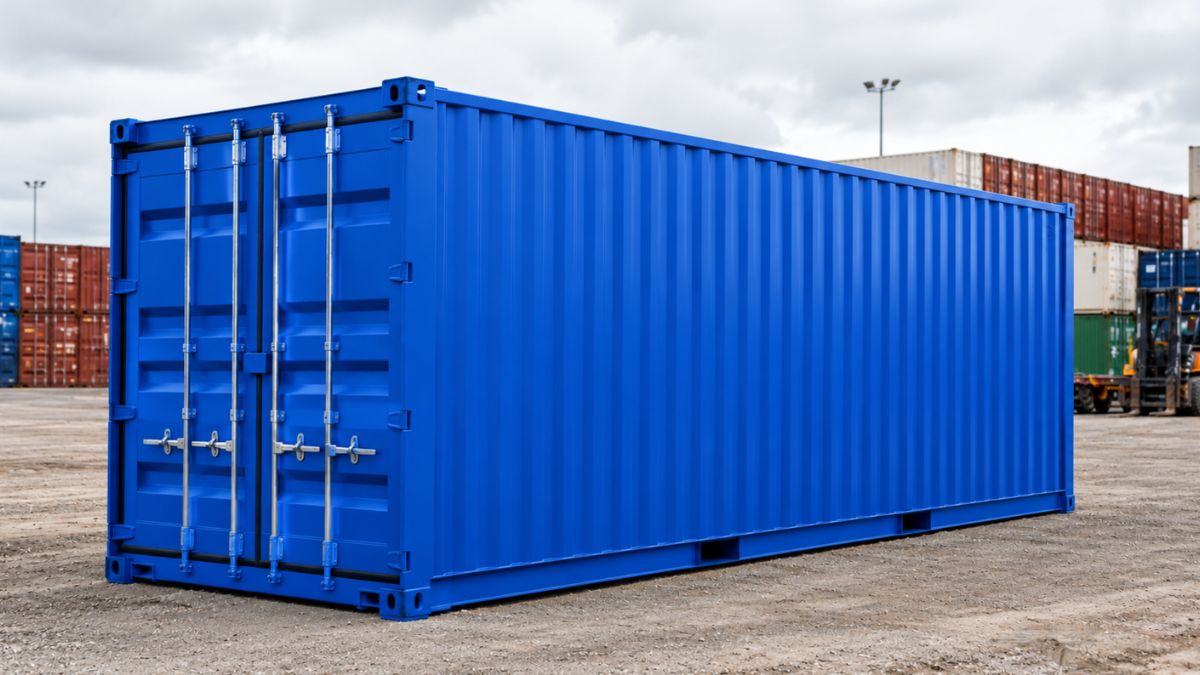
In 2026, a standard 20-foot conex runs about $90–$200 a month and a 40-foot about $120–$300, before anything gets trucked in. Lock in a 12-month term and most yards knock 15–30% off the monthly. Delivery and the pickup at the end are their own line items, usually $150–$500 each way. And for nearly any jobsite or commercial job, renting pencils out cheaper than buying until you're past roughly 12–18 months parked on one site.
What drives your monthly rate
Call three yards for the same 20 ft and you'll get three different numbers. It isn't random. Six things move the quote, and once you know them you can tell a fair price from a padded one:
Container size
The biggest lever. Pricing climbs from a 10 ft up through the 40 ft high cube (HC). That extra foot of interior height on an HC costs a little more.
Term length
Month-to-month is the priciest way to rent. Commit to 12 months and the per-month drops 15–30%. A yard would rather keep a box out on a long term than cycle it back to the depot.
Grade & condition
You're paying for looks as much as function. A wind-and-water-tight (WWT) unit, dinged but dry, costs less than a clean one-trip box fresh off a single ocean voyage.
Haul distance
Steel is heavy and trucks bill by the mile. The farther your site sits from the yard's depot, or the nearest port, the more the drayage stacks on top.
Local supply
Coastal metros sit on stacks of empties coming off ships, so rates run low. Land-locked markets with thin inventory quote higher. Same box, different zip code.
Unit count
Take several boxes at once, or open a house account, and you'll usually earn a per-unit break: one dispatch, one invoice, less handling for the yard.
Rental rates by container size
These are 2026 going rates for standard dry storage boxes across the lower 48, no reefers or specialty builds. The 20 ft is the workhorse: about 160 sq ft of floor, which swallows a small crew's tools and materials or a season's worth of overstock. The container size guide has interior dimensions and what actually fits in each.
| Container size | Month-to-month | 12-month term | Typical use |
|---|---|---|---|
| 10 ft | $90 – $175 | $70 – $130 | Tight sites, tool lockup |
| 20 ft standard | $90 – $200 | $70 – $150 | Most jobsites, overflow |
| 40 ft standard | $120 – $300 | $95 – $215 | Materials, equipment, inventory |
| 40 ft high cube | $130 – $325 | $105 – $230 | Bulky loads, extra headroom |
Rates are for the box only. Delivery, the end pickup, and any pad work are separate. Specialty builds (reefers, insulated boxes, ground-level offices) sit well above these numbers.
What rental costs by use case
The same 40 ft gets quoted two different ways depending on who's renting it and for how long. The two big buckets play by different rules:
Short term, higher monthly
Jobsite rentals ride the build schedule, usually 1–6 months, and the delivery has to thread live cranes, muddy access, and a tight laydown, so the per-month runs higher. A 40 ft for a three-month pour or fit-out typically lands at $150–$275/mo. Bonus: a lockable steel box checks OSHA's requirement to keep tools and materials secured on-site.
≈ $150–$275/mo · 40 ft, 3-monthLonger term, volume discounts
Overflow stock, seasonal inventory, equipment lockup, and document archiving tend to run 6–24 months. The long terms and multi-unit orders pull the best per-unit rate, and most yards will open a house account and bill every site on one invoice.
Best rates on 12+ month terms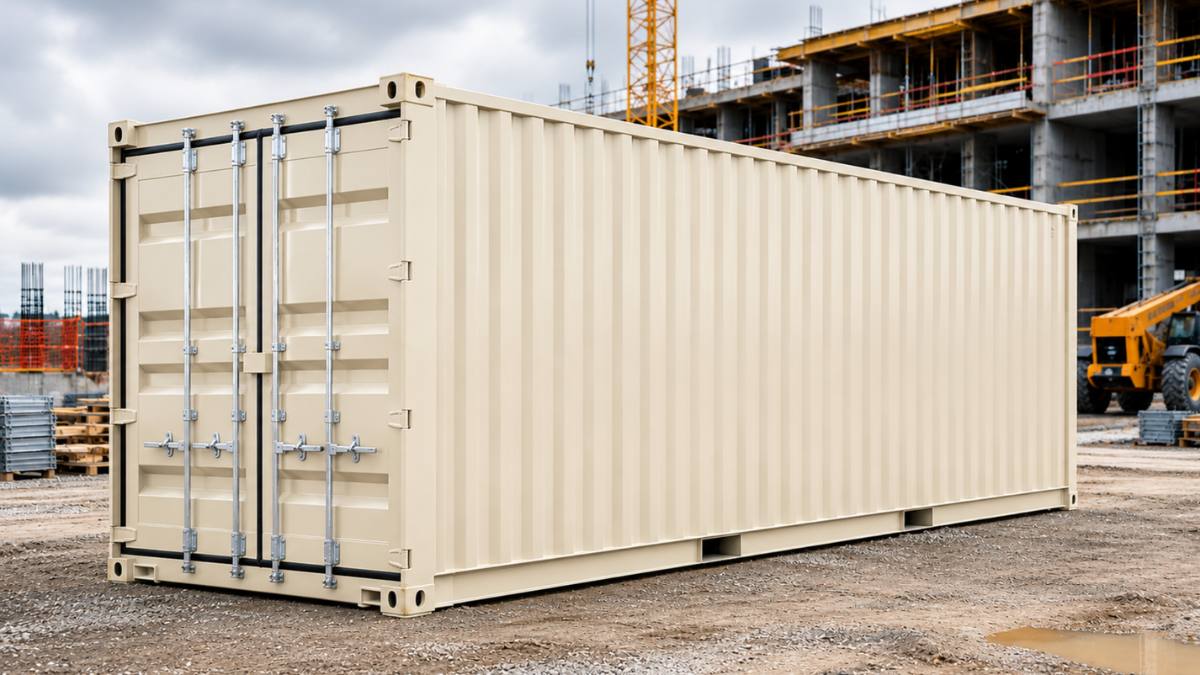
Beyond the monthly rate: delivery, site prep & permits
The one-and-done charges are where budgets blow up. Trucking alone can eat 15–40% of your delivered cost, so price these in before you put quotes side by side:
Delivery & pickup
Priced per trip, each direction. Push past the yard's free-mileage radius and the number climbs quick.
Site preparation
Never set a box straight on dirt. It settles unevenly and the doors rack until they won't latch. Crib the corners up on concrete blocks, or lay a compacted gravel pad for anything past six months.
Permits
Some towns want a temporary-use or zoning permit before a box lands, especially on lots near housing. Rural and industrial parcels are usually looser.
Where your money goes
Trucking and setup are mostly one-and-done, so on a short rental they can dwarf the rent itself. Here's a representative split for a standard 20 ft:
The takeaway: round-trip trucking is over half the spend on a 3-month rental but barely a quarter on a 12-month one. The longer the box stays, the more the monthly rate, not the one-and-done charges, sets your total.
Representative math on mid-range 2026 numbers: ~$130/mo (3-month) and ~$100/mo (12-month) on a 20 ft, $600 round-trip trucking, and $150 (blocks) to $400 (gravel pad) for the pad. Add a $15–$500 permit where required. Your split shifts with haul distance, term, and grade.
Will the truck fit? Delivery & site access
Most deliveries roll in on a tilt-bed truck that jacks its deck up and slides the box off the back, so it needs a straight, firm, level run to work. Check your access before you book. A truck that shows up and can't set the box still bills you for the trip, a dry run in yard-speak.
Leave about 10 ft of width for the truck and box, and clear any low limbs or service lines over the approach. The deck tilts up high before it sets down.
Rent or buy? A commercial buyer's view
For a benchmark: a used WWT 20 ft sells for about $2,000–$3,200, and a one-trip box for $3,500–$5,500 before you truck it in. Buying can look cheaper on a spreadsheet, but that math assumes the box stays put on one site forever, which isn't how most jobs run. The rent vs. buy guide runs the full commercial comparison; the short version is to match the call to the work:
Renting usually wins when…
- The job's on a clock, 18 months or less
- You'd rather keep the cash working (an OpEx line, not a capital asset on the books)
- The box may hop between sites as the work moves
- You don't want to deal with reselling or scrapping it later
- Repairs, redelivery, and the end pickup stay the yard's problem
Buying can make sense when…
- The storage is permanent and bolted to one address
- You're clearly past the 18–24 month break-even
- You want to cut it up for shelving, man-doors, roll-ups, or a reefer unit
- You've got the yard space and a forklift to move your own iron
Reading the rental agreement: what to confirm
The monthly rate on the flyer never tells the whole story. Before you sign, nail down these so the number you compared is the number you'll actually pay:
- Both trips priced up frontGet the end pickup on the quote now, not sprung on you the day you call for the box to go.
- Minimum term and early-outKnow the shortest commitment and what it costs to send the box back early.
- Damage waiver (DW)Most yards push an optional waiver on dings to the box. Ask if it's required and what it leaves out. Floors and door gear often aren't in it.
- Spot moves and redeliveryNudging the box across the yard, or shifting it to another site, is almost always its own charge.
- The rate after the teaserIntro monthlies can jump at renewal. Ask what the standing, go-forward rate is.
How to lower your rental cost
A handful of moves swing the price more than haggling ever will, roughly in order of payoff:
- Go long. A 12-month term usually sits 15–30% under month-to-month.
- Rent from the closest yard to a port or depot. Every mile of drayage is on you.
- Take a WWT box over a one-trip when looks don't matter. Same dry storage, lower rate.
- Put several units on one house account to trip the volume break.
- Prep your own pad, level gravel or cribbing, so the yard can't tack on a site charge.
- Get three local quotes on the same spec: box grade, term, and both trips.
Frequently asked questions
Is delivery included in the rental price?
Usually not. The drop and the end pickup are their own line items, roughly $150–$500 each way, and the haul from the yard's depot can run 15–40% of your all-in cost. Get both trips on the quote before you sign.
Can I rent month-to-month, or do I have to sign a long-term contract?
Month-to-month is easy to get and the most flexible, but it's the top of the rate card. Sign a 12-month term and the per-month usually drops 15–30%.
How much space do I need for delivery?
Give a tilt-bed about 70 ft of straight, level run for a 20 ft, and roughly 120 ft for a 40 ft. Leave around 10 ft of width and 16 ft of overhead clearance, and clear any low limbs or service lines over the approach.
Is it cheaper to rent or buy a storage container?
Under 12–18 months on one site, renting almost always wins and keeps your cash free. Buying only pulls ahead once the need is permanent, parked at one address, and clearly past the 18–24 month break-even.
Can I finance or rent-to-own a container?
Yes. Plenty of yards run rent-to-own (RTO) or lease-to-own, usually over two to three years at a monthly close to a straight rental, often on just a soft credit pull. It fits when you know the box is staying on one site for the long haul.
How is a storage container different from a self-storage unit?
A rented box sits on your own lot with ground-level, round-the-clock access and a lower cost per square foot. A self-storage unit makes more sense when you need climate control, have no room on-site, or only need a locker-sized space.
Find. Compare. Save.
Line up vetted container rental yards near your site and compare quotes side by side. No paid placement, no obligation.
Compare Container Rental QuotesNumbers reflect 2026 research across U.S. container rental suppliers and move with region, grade, and term. Treat them as budgeting estimates, and pull a local quote for a firm price. RentalModo lists suppliers on an independent editorial basis and takes no payment for placement.