Storage Container Sizes: 10, 20 & 40 ft (and How to Choose the Right One)
There are really only three sizes to know: 10, 20 and 40 feet. Pick the wrong one and it gets expensive fast, since a second container means a second delivery fee and a half-empty one means paying every month for space you aren't using. This guide shows what each size actually holds, matches common jobs to a size, and walks you through the choice the way a rental yard would.
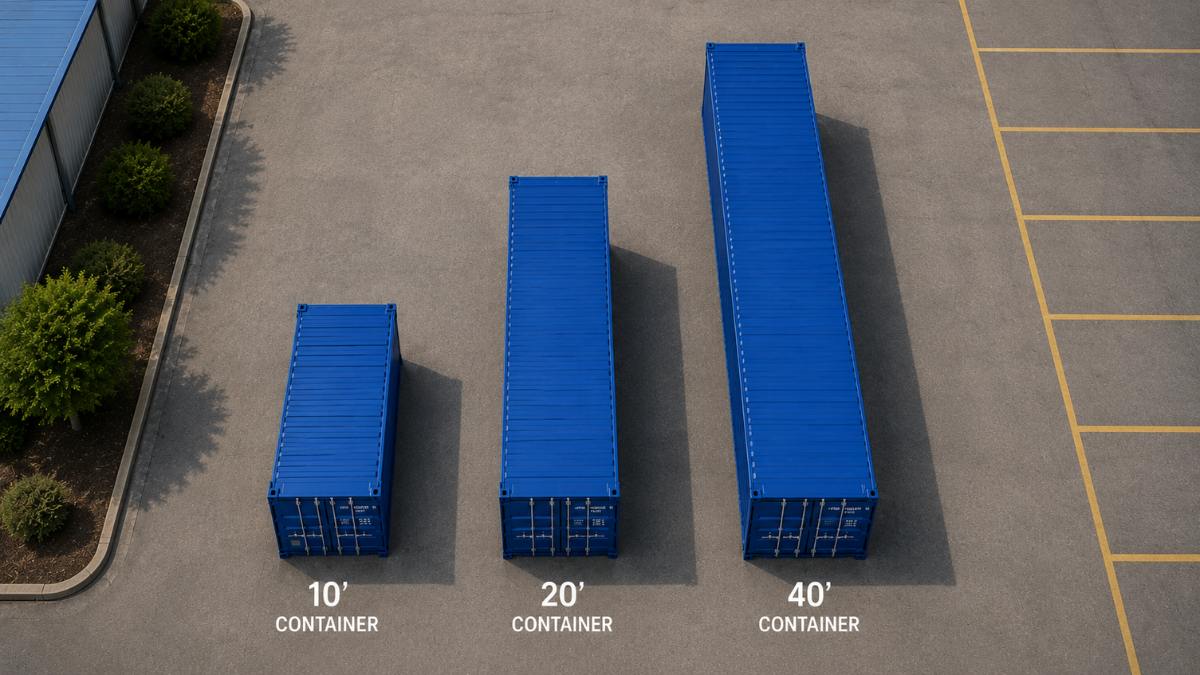
The 20-foot container is the most-rented size and the safe default: about 150 sq ft of floor, or roughly ten standard pallets. Drop to a 10-foot unit (~72 sq ft, ~4 pallets) for tool lockups and tight sites; step up to a 40-foot unit (~300 sq ft, ~20 pallets) when you need the most room or have to store long materials like lumber and pipe. To size it right, start from what you'll store. Think in pallets or cubic feet, add 15-20% so you can still reach things, then check your longest item and your delivery access before you book.
The three standard sizes at a glance
Steel storage containers, also called shipping containers, conex boxes, or sea cans, come in a handful of sizes, but rental yards mostly stock three: 10, 20 and 40 feet. They're all 8 feet wide, so the only thing that really changes is the length. Here's how they stack up on the numbers that decide fit:
| Size | Interior (L × W × H) | Floor area | Volume | ≈ Pallets | Best for |
|---|---|---|---|---|---|
| 10 ft | 9'3" × 7'8" × 7'10" | ~72 sq ft | ~560 cu ft | ~4 | Tool lockup, tight sites |
| 20 ft | 19'4" × 7'8" × 7'10" | ~150 sq ft | ~1,170 cu ft | ~10 | Most jobsites & inventory |
| 40 ft | 39'6" × 7'8" × 7'10" | ~300 sq ft | ~2,390 cu ft | ~20 | Bulk storage, long materials |
| 40 ft high cube | 39'6" × 7'8" × 8'10" | ~300 sq ft | ~2,700 cu ft | ~20 | Tall loads, extra headroom |
The interior numbers are the space you actually get, and they run a little short of the name: a "20-foot" box is about 19'4" long inside. The door opening is roughly 7'8" wide by 7'6" high on every size, which matters more than floor space when you're loading something bulky. Size moves your monthly rate more than anything else, but it isn't the only factor: the container's condition grade and how long you keep it matter too, and the cost guide breaks that down.
Capacity to scale: think in pallets
Square footage is hard to picture; pallets aren't. The easiest way to size a container is to count your load in standard 48-by-40-inch pallets (the GMA pallet most freight ships on), set flat on the floor in one layer. Since all three sizes are the same width, pallets always go two across, so capacity climbs almost perfectly with length. A 40-foot box really does hold about twice a 20-foot.
Each cell is one standard pallet on the floor. Counts are approximate; real capacity depends on how tightly you can load and how much aisle space you leave to reach things.
A quick way to estimate: tally your load in pallets (or rough cubic feet), then add 15-20% for access aisles so you're not unloading the whole container to reach one item. Roughly 4 pallets points to a 10-foot unit, 10 to a 20-foot, and 20 to a 40-foot. If you'll stack pallets two-high or store tall gear, jump to the height question below before you commit.
What actually fits in each size
Numbers are easier to judge against something familiar. Here's what each size holds in practical terms, who it suits, and where to see live rental options and pricing for that size:
The lockup
About the contents of a studio apartment, or a half-garage.
- A small crew's hand and power tools
- Landscaping gear, mowers, a little material
- Overflow stock for a small shop or office
- Fits where a 20 ft won't: alleys, single stalls
Best for: secure tool storage and tight urban sites.
The workhorse
About the contents of a two- to three-bedroom home, or a one-car garage.
- A full crew's tools plus staged materials
- A season of retail or restaurant inventory
- ~10 pallets of boxed records on shelving
- Easy delivery to nearly any commercial lot
Best for: most jobsites and general business storage.
The heavy hauler
About the contents of a four- to five-bedroom home, or a two-car garage.
- Long materials: lumber, pipe, drywall, conduit
- Bulk inventory and distribution overflow
- Large equipment and fleet parts
- Best cost per square foot, when you fill it
Best for: maximum capacity and full-length loads.
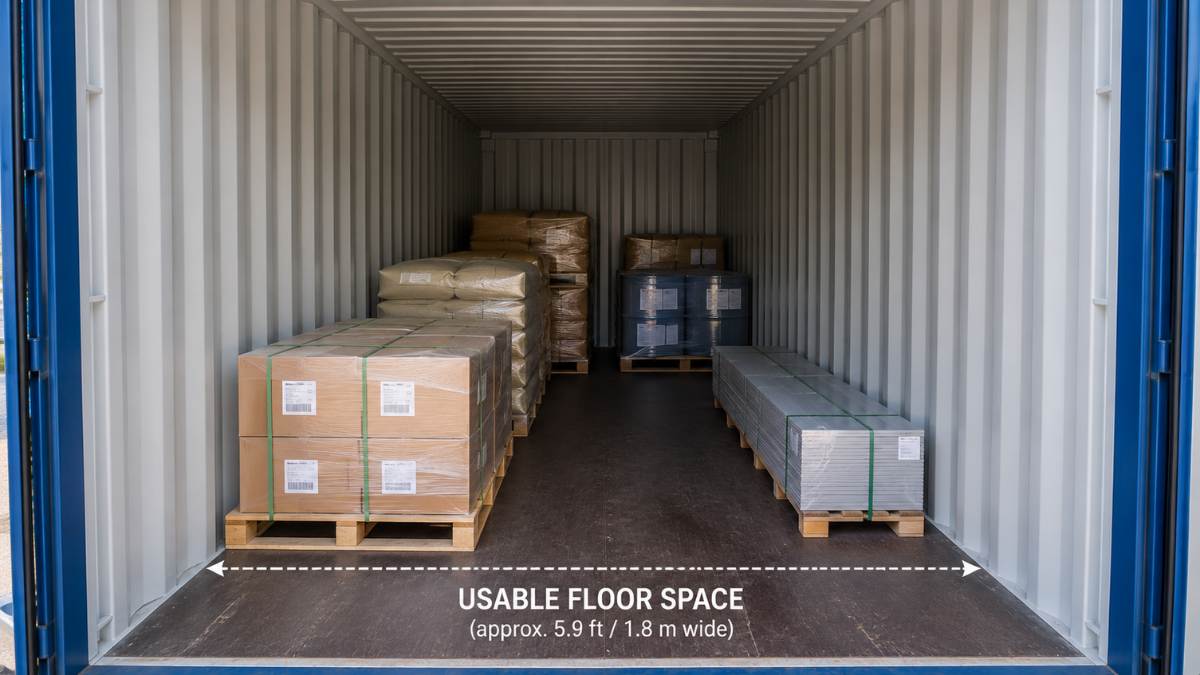
The fourth dimension: standard vs high cube
Length and width get all the attention, but height decides whether tall gear or a second layer of pallets fits. A standard container gives you about 7'10" of headroom inside. A high cube (the trade name for a taller box) adds roughly a foot, to about 8'10", for the same length and width. High cubes are easy to find in the 40-foot size and worth the small extra cost any time you're storing tall equipment or stacking loads.
Length and width are identical; only the ceiling changes. That extra foot is the difference between a tall load fitting or not.
Match your need to a size
The right size depends on what you're putting inside. Here's how everyday storage jobs line up with a size. The rental use-cases guide digs into each one:
| What you're storing | Best size | Why |
|---|---|---|
| Tools & equipment, small crew | 10-20 ft | Secure ground-level lockup; 10 ft slips into tight sites, step to 20 ft if you're staging materials too |
| Full jobsite storage, mid-size build | 20 ft | Holds a crew's tools plus staged materials without paying for empty space |
| Long materials: lumber, pipe, drywall | 40 ft | The only standard size that takes 20 ft+ lengths lying flat |
| Seasonal retail or restaurant inventory | 20 ft | A season's overflow with easy delivery to most commercial lots |
| Records & document archive | 20 ft | Roughly 10 pallets of boxes on shelving, dry and lockable |
| Distribution or warehouse overflow | 40 ft + | Best cost per square foot at volume, about 20 pallets per unit; add more as needed |
| Retail pop-up or event storage | 10-20 ft | Small footprint, short term, quick to place and swap out |
| Large or tall equipment, fleet parts | 40 ft HC | Depth for long items and a foot of extra headroom for tall machinery |
How to choose the right size, step by step
When you're stuck between two sizes, run through these in order. It's the same checklist a rental yard walks a customer through:
- Start from volume, not floor area. Estimate your load in pallets or rough cubic feet, then add 15-20% for aisles. About 4 pallets → 10 ft, 10 → 20 ft, 20 → 40 ft.
- Check your longest item. Interior length is about 9 ft, 19 ft and 39 ft. Anything over ~19 ft (long lumber, pipe, conduit, trusses) forces a 40 ft regardless of how little you're storing.
- Measure the site and the delivery run. You need the container's footprint plus a straight, level path for the tilt-bed truck. Confirm delivery access before booking, or you may pay for a failed drop.
- Weigh one big unit vs two small ones. Two 20 ft containers split across sites or phases and are easier to place, but you pay a second delivery and pickup. One 40 ft is cheaper per square foot when a single spot works.
- Factor term and cost per square foot. Bigger costs more in absolute dollars but usually less per square foot; a full 20 ft still beats a half-empty 40 ft. See the cost guide, and if the need is long-term, the rent vs. buy comparison.
- Confirm the door-opening width. The cargo doors are about 7'8" wide, so an oversized item can stall at the opening even when the interior volume is fine.
Site footprint: the space you actually need
Bigger isn't better if the truck can't place it. Beyond the container's own footprint, delivery needs a straight, level run to slide the unit off the tilt-bed. Plan for both:
| Size | Container footprint | Straight-line space for delivery |
|---|---|---|
| 10 ft | 10 ft × 8 ft | ~50 ft |
| 20 ft | 20 ft × 8 ft | ~70 ft |
| 40 ft | 40 ft × 8 ft | ~120 ft |
Also allow about 10 ft of width and 16 ft of overhead clearance for the truck, and clear any branches or wires along the path. On a tight lot, two 20 ft units are often easier to place than one 40 ft. Larger units, or any container set near a residential zone, may need a temporary-use or zoning permit; the delivery guide covers access in full.
Six sizing mistakes to avoid
Most sizing regret traces back to one of these:
- Sizing up "just in case." You pay every month for empty cubic feet, and a fuller small unit beats a half-empty large one.
- Sizing down and needing a second container. A second unit means a second delivery and pickup fee, which often erases the savings.
- Forgetting access aisles. You can't pack wall-to-wall, floor-to-ceiling and still reach things, so leave 15-20% for movement.
- Ignoring the door-opening width. The interior is wider than the door; oversized loads can jam at the opening.
- Overlooking height for stacking. Standard interior height caps double-stacked pallets, so a high cube earns its keep for vertical loads.
- Choosing size before checking delivery. The biggest unit you can afford is useless if the truck can't reach the spot.
Once the size is settled, the rental agreement is where term, delivery, and fees get locked in. Know what to confirm before you sign.
Frequently asked questions
Which storage container size is most popular?
The 20-foot container is the most-rented size. It holds a full crew's tools or a season of inventory (about 150 sq ft, or roughly ten standard pallets) yet is small enough to place on nearly any site. Step up to a 40-foot unit only when you need maximum capacity or have to store long materials.
How much more fits in a 40 ft than a 20 ft container?
Roughly double. A 40-foot unit gives about 300 sq ft of floor and holds around 20 standard pallets, versus about 150 sq ft and 10 pallets in a 20-foot. It also adds the length to lay long materials like lumber and pipe flat, which a 20-foot can't do.
Is a 40 ft always cheaper per square foot than a 20 ft?
Usually, yes. You get about twice the space while delivery and setup stay similar, so the cost per square foot drops. But that only pays off if you fill it. A half-empty 40-foot unit costs more in total than a well-packed 20-foot, so match the size to what you'll actually store.
What is the difference between a standard and a high-cube container?
Same length and width, but a high cube adds about a foot of interior height, roughly 8'10" versus 7'10" in a standard. The extra headroom helps with tall equipment or a second layer of stacked loads. High cubes are most common in the 40-foot size.
Can I fit a 40 ft container on my site?
You need the 40-foot footprint (40 ft by 8 ft) plus roughly 120 feet of straight, level space for the delivery truck, along with about 10 feet of width and 16 feet of overhead clearance. On tight lots, two 20-foot units are often easier to place. Confirm access before booking.
Should I rent one 40 ft or two 20 ft containers?
One 40-foot unit is cheaper per square foot and simpler when a single spot works. Two 20-foot units add flexibility (you can split them across sites or project phases and they fit tighter spaces), but you pay two delivery and pickup fees, so weigh that against the convenience.
Find. Compare. Save.
Know your size? Get matched with vetted storage container suppliers in your area and compare quotes side by side, with no obligation.
Compare Container Rental QuotesDimensions and capacities reflect standard ISO storage container specifications and 2026 U.S. rental-market research; exact interior figures vary slightly by manufacturer and build. Estimates are for planning only; request a local quote to confirm dimensions and pricing. RentalModo lists suppliers on an independent editorial basis and accepts no payment for placement; the RentalModo Score reflects expert judgment, not user reviews. Run a rental yard? You can get your company listed.