Renting vs. Buying a Storage Container: The Break-Even Math and How to Decide
Rent or buy isn't really about short-term versus long-term. It comes down to when renting starts to cost more than buying, plus how much cash you want to tie up, whether you'll change the container, and how your business records the cost. For most storage needs, the numbers cross at around 18 months. This guide runs the real math on an actual container, shows the costs each side can hide, and gives you a decision tree you can walk through in five minutes.
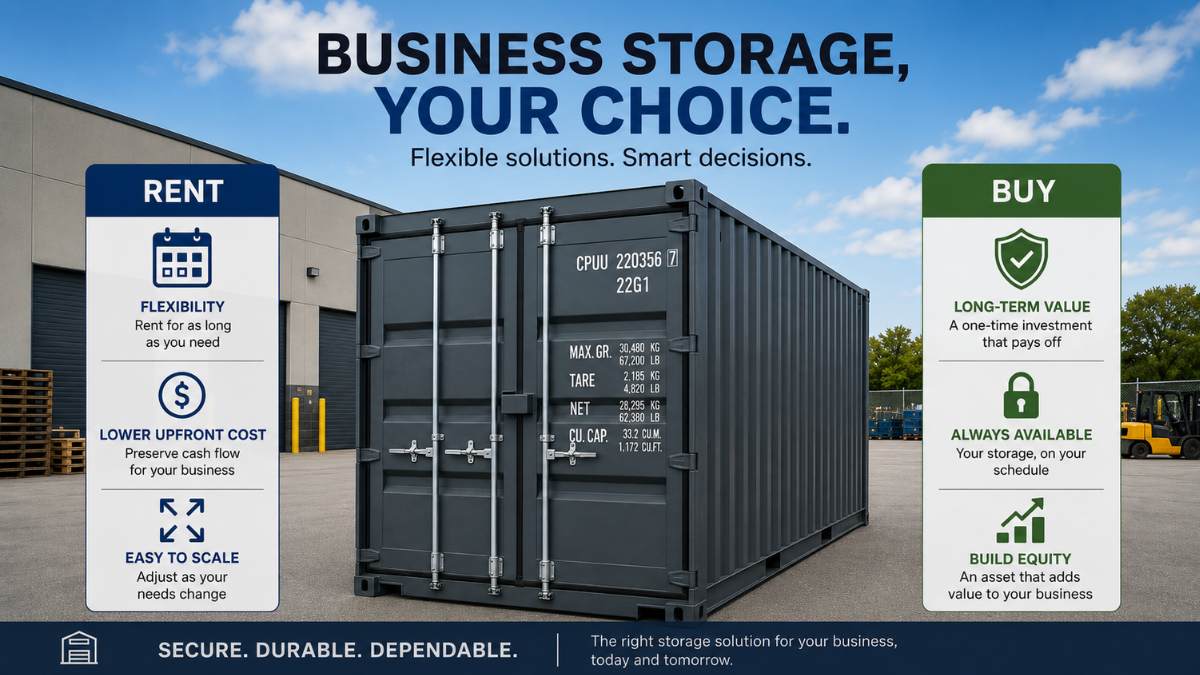
Rent if you'll need the container for less than about a year, you're not sure how long you'll need it, or you don't have a permanent spot for it. Buy if you'll need it for the long haul, you have the space and the cash up front, or you want to change the box. The tipping point is around 18 months. Below that, renting is cheaper and simpler. Above it, buying wins. And because a used container barely loses value, you can usually sell it later and get back a big share of what you paid, which makes the real break-even come even sooner. The one rule that beats every rule of thumb: run your own numbers against the break-even below before you decide.
Rent or buy? It's four questions, not one
Most guides reduce this to "short-term rent, long-term buy." That's the starting point, not the answer. Which option wins comes down to four levers, and they don't always point the same way:
1) How long you'll need it. How long, and how sure are you? 2) Cash and cash flow. Can you (or do you want to) pay up front, or is a steady monthly bill easier to get approved? 3) Control. Will you change the container (cut a door, add shelving, insulate, paint your logo) or keep it somewhere for good? 4) Total cost. The all-in cost of each option over the time you'll actually use it, including resale value. Rank these for your situation and the answer usually becomes clear. The rest of this guide covers each one.
Who's storing and why changes how these rank. A restoration crew in the middle of a job, a retailer's seasonal overflow, a school district, and a city yard each land differently. The storage container use-cases guide walks through the common situations if yours isn't obvious.
The break-even: where buying overtakes renting
The clearest way to decide is to chart the running total over time. Renting starts low (just a delivery fee), then climbs every month. Buying is a big cost up front that then stays nearly flat. Where the two lines cross is your break-even: rent below it, buy above it.
Take a used, storage-grade 20-foot container, the most-rented size. Using rough 2026 planning figures: renting runs about $135/month plus roughly $250 to deliver it in, while buying a used unit runs about $2,600 delivered. Set the two equal ($250 + $135 × months = $2,600) and they cross at about 18 months.
Rough 2026 figures for a used 20 ft unit. The rent line shows delivery plus monthly rate (a one-time ~$250 haul-out is added at return), and the buy line shows purchase plus delivery. The marker shows the net cost once you resell.
The lines cross near 18 months, but that undersells the case for buying. A used container barely loses value. Sell it later and you usually get back a big share of what you paid, so the net cost of owning is far below the sticker price (see the total-cost table next). Rental rates also drop on longer terms, which can push the break-even the other way. So treat 18 months as a planning guide, not a hard line, and check current rental pricing for your term.
The break-even lands in about the same place across sizes. A 10-foot unit (lower rent, lower price) and a 40-foot unit (higher on both) each cross at roughly a year and a half on the same math. Bigger boxes cost more to rent and to buy, so the ratio holds.
Total cost of ownership: the costs each side hides
Sticker price and monthly rate are only part of it. Renting rolls in costs you'd carry as an owner, and owning brings costs a renter never sees. Here's the full picture for the same 20-foot container over three years (rough planning figures):
| Cost line | Rent (36 months) | Buy (used) |
|---|---|---|
| Container, up front | $0 | ~$2,200 |
| Delivery in | ~$250 | ~$400 |
| Monthly rate × 36 | ~$4,860 | $0 |
| Maintenance (reseal / touch-up) | included | ~$150 |
| Haul-out / pickup | ~$250 | $0 |
| Resale value recovered | $0 | −$1,700 |
| 3-year net total | ~$5,360 | ~$1,050 |
Renting ends with nothing to show for it. Buying ends with a container you keep until you choose to sell it. Two things the table can't fully price in: space (an owned unit sits on your lot for as long as you keep it, while a rental only takes up space while you use it) and your time (selling takes effort that returning a rental doesn't). Even so, over three years buying comes out about $4,300 cheaper after resale. Delivery is the easy-to-miss cost on both sides. You pay to bring a rental in and to haul it out. The delivery and site-prep guide covers those fees and access requirements.
The business angle: OpEx, CapEx, and your balance sheet
For a company, the call often turns less on the raw math than on how the cost is booked. Renting is an operating expense; buying is a capital asset. That one distinction changes your taxes, your cash position, and how fast you can get the spend approved.
| Rent (operating expense) | Buy (capital asset) | |
|---|---|---|
| Booked as | A monthly expense on the P&L | A fixed asset on the balance sheet |
| Typical tax handling | Deductible as a business expense in the period | Written off over its useful life, or deducted up front if it qualifies (Section 179 or bonus depreciation) |
| Effect on cash & credit | Keeps cash free; no debt or borrowing | Ties up cash unless financed |
| On the books | Nothing to track or dispose of | An asset to track, insure, and eventually resell or retire |
| Approval & budgeting | Steady, predictable bill; usually easy to approve | A one-time capital request; often slower to approve |
| Leans your way when… | Cash flow and flexibility matter most | You have capital and want the asset and the write-off |
This is general information, not tax advice. Whether you write off a purchased container over several years or deduct it right away under Section 179 or bonus depreciation depends on your business and the current IRS rules, so check the treatment with your accountant. The main point holds either way: renting keeps your cash and credit free and the box off your books, while buying puts an asset on the balance sheet that you can write off, change, and later sell.
When renting wins, when buying wins
Set the math aside and it comes down to matching the container to your situation. Rent for flexibility and when things are uncertain; buy for the long haul and when you want control.
Flexibility & short-term needs
- The need is under ~12 months, or the timeline is uncertain
- You don't have a permanent, cleared spot to keep it
- Cash is tight or approval is slow, so a monthly bill is easier
- You want zero maintenance, no asset to insure, and no resale to manage
- You may need to swap sizes or add units as the project changes
- It's a one-off, like a remodel, a seasonal surge, an event, or a disaster-recovery job
Best for: single projects, seasonal overflow, and any need you can't size in years.
What you're responsible for is spelled out in the rental agreement, so read it before you sign.
Permanence & control
- The need is open-ended or clearly multi-year (2+ years)
- You have a permanent, level spot with room for delivery
- You want to change it: roll-up doors, shelving, vents, insulation, branding
- Your local rental rates are high relative to purchase prices
- You want an asset you can depreciate, relocate, or resell
- You'll run several and want to build an owned fleet
Best for: permanent storage, heavy modification, and long-term needs where the math and the resale both favor owning.
Condition drives price and how long it lasts. The container grades guide explains your options, and a container kept in one spot may still need a zoning or use permit.
The middle paths: rent-to-own and used vs. new
The choice isn't strictly binary. Two hybrids handle the cases where a clean rent-or-buy answer doesn't quite fit.
Rent-to-own (lease-purchase). If you clearly need a container but don't have the cash up front yet, rent-to-own bridges the gap. You pay monthly, part of each payment goes toward owning it, and the container is yours at the end of the term. It's a good fit when you know you'll want the box long-term but can't (or don't want to) pay a lump sum, and it skips the resale question since you keep the unit. The catch: you'll usually pay more in total than just buying used outright, so weigh it against renting now and buying later.
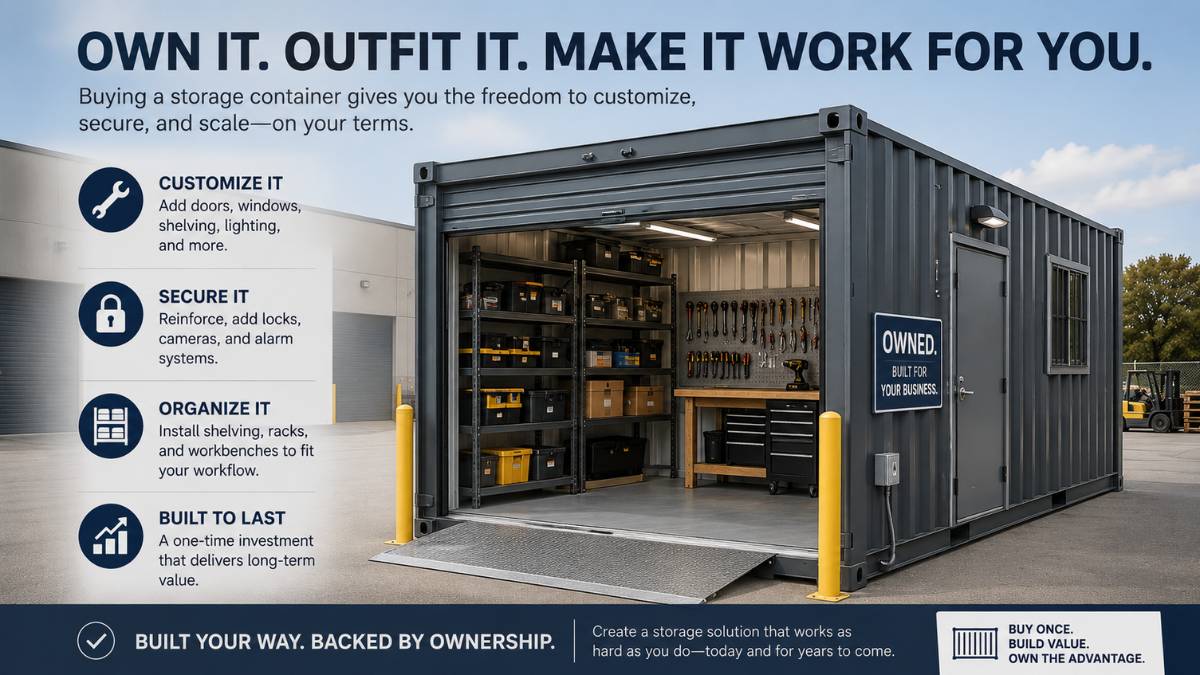
Used vs. new, if you're buying. The biggest thing that changes the price is condition, not size. Most storage buyers don't need a spotless "one-trip" container. A used, cargo-worthy or wind-and-watertight unit stores the same load for hundreds to thousands less. Pay the new-container premium only for climate-sensitive goods, food-grade needs, or container conversions where looks and an airtight seal actually matter. The cost guide breaks down the price gap between grades.
A five-minute decision tree
Walk through these steps in order. The first "yes" is usually your answer:
You can almost always buy later, but you can't undo a purchase, so when it's a close call, renting keeps your options open.
Six rent-vs-buy mistakes to avoid
Most regret traces back to one of these:
- Renting forever out of habit. Month-to-month is easy to start and easy to forget. Plenty of renters go past the break-even without noticing and keep paying. Set a calendar reminder.
- Buying without a permanent spot. An owned container you later have to move, or can't legally keep where it sits, wipes out the savings and then some.
- Leaving resale value out of the math. A used container isn't a sunk cost. Factor what you'll recover on resale and buying looks far better than the sticker suggests.
- Forgetting delivery both ways when renting. You pay to bring a rental in and to haul it out, so count both against the buy comparison.
- Over-spec'ing a purchase. Most storage doesn't need a one-trip box; a used cargo-worthy unit does the same job for less.
- Underestimating what ownership costs. Rust touch-up, a reseal, insurance, and the eventual haul-out are real, if small. A rental rolls them in for you.
Once you've chosen, the details that actually cost money get decided in the rental agreement if you rent, or in the condition grade and delivery terms if you buy. Know what to confirm before you sign or pay.
Frequently asked questions
At what point does buying beat renting a storage container?
On simple math, at about 18 months. That's where the running total of renting a 20-foot unit passes the cost of buying a used one. Add in resale value, since a used container keeps most of its worth, and the real break-even often comes sooner. The exact point shifts with size, your rental term, and local prices, so run your own numbers.
Do storage containers lose value over time?
Slowly. Steel containers lose value far more slowly than most equipment, and a well-kept used unit keeps a big share of its value for years. That's the main reason buying looks good past the break-even: when you're done, you can sell it and get back much of what you paid, which most rent-vs-buy comparisons leave out of the math.
Can I write off a rented or purchased container on taxes?
This is general information, not tax advice. Renting is usually deductible as an operating expense in the period you pay it. A purchase is a capital asset you write off over its useful life, or may be able to deduct up front under Section 179 or bonus depreciation if it qualifies. How each one applies depends on your business, so check the treatment with your accountant.
What is rent-to-own, and is it worth it?
Rent-to-own (lease-purchase) means you pay monthly, part of each payment goes toward owning it, and you own the container at the end of the term. It's a good fit when you need the unit long-term but don't have the cash up front to buy outright. You'll usually pay more in total than buying used outright, so compare it against renting now and buying later.
Who handles maintenance and repairs, the renter or the owner?
On a rental, the supplier takes care of keeping the structure sound, unless you cause the damage, and the agreement spells out exactly what you're responsible for. Own the container and every reseal, rust touch-up, and repair is on you. That ongoing responsibility is a real, if small, cost of ownership worth budgeting for.
Should I buy a new or a used container for storage?
For storage, a used cargo-worthy or wind-and-watertight container almost always wins. You get the same protection for hundreds to thousands less than a new one-trip unit. Choose new only for climate-sensitive goods, food-grade needs, or container conversions where an airtight seal and looks genuinely matter. Match the grade to the job, not to preference.
Find. Compare. Save.
Leaning toward renting? Get matched with vetted storage container suppliers in your area and compare quotes side by side, with no obligation.
Compare Container Rental QuotesDollar figures come from 2026 U.S. rental-market research and are rough planning estimates for a used, storage-grade unit. Actual pricing varies by size, condition grade, term, region, and delivery distance, so request a local quote to confirm. This guide is general information, not financial, tax, or legal advice. RentalModo lists suppliers on an independent editorial basis and takes no payment for placement. The RentalModo Score reflects expert judgment, not user reviews. Rent or sell containers? You can get your company listed.