10 Commercial Uses for Storage Container Rentals | RentalModo
10 Commercial Uses for Storage Container Rentals: Matched to the Right Size, Term, and Grade
Anyone can list ten uses for a shipping container. The real question is which box, for how long, and what to watch for. A law firm storing old case files and a metal shop holding extra steel both use the same container. But they need very different things from it. This guide covers ten jobs a rented container does well. Each one is matched to the right size, a fair rental term, and the one mistake renters often make.
Last updated July 2026
Match the job to the box, not the other way around
Search “uses for a storage container” and you get the same twenty-item list everywhere. It reads as if every business needs the same thing. They don’t. The container is the same, but the job is not. Three things decide whether a rental works. The size has to fit both your stuff and your lot. The grade has to protect what is inside. And the term has to match how long you need it. Get those three right and almost any storage problem has a clear answer.
The jobWhat you’re storing & where
→
Size10, 20, or 40 ft
→
GradeCargo-worthy or watertight
→
TermWeeks, months, or years
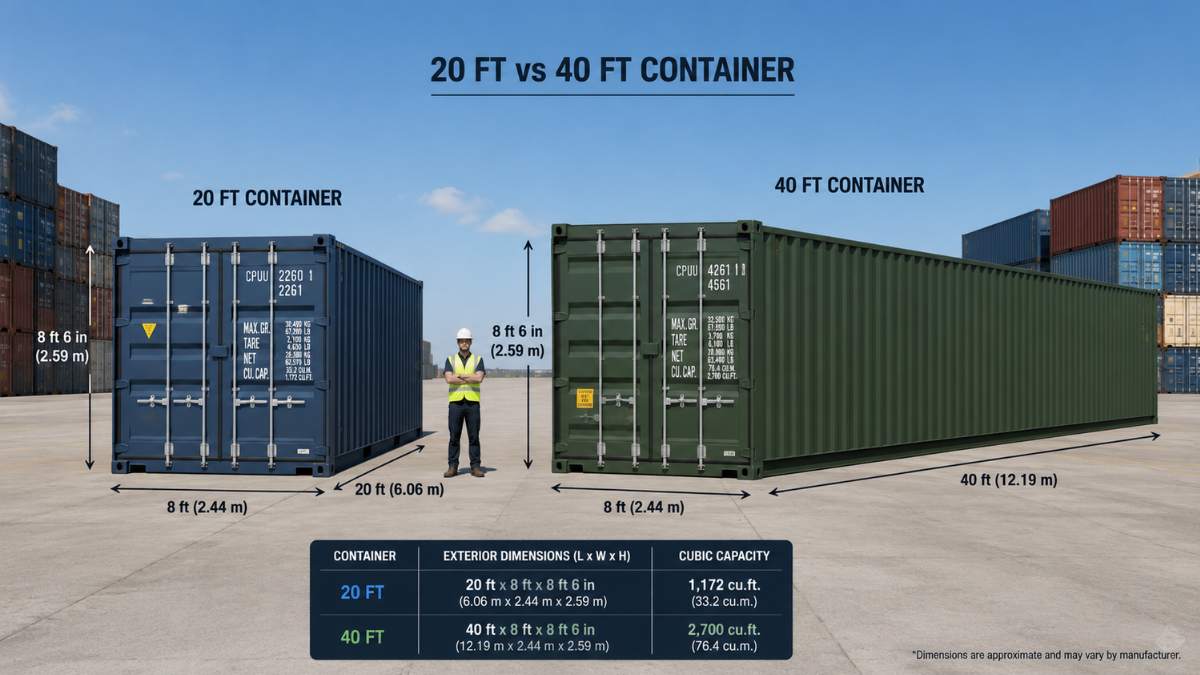
Almost every job below fits one of three sizes: the 10 ft, 20 ft, or 40 ft. Not sure which one you need? Skip ahead to the size reference.
Ten commercial jobs a rented container does well
Each one below is written from the renter’s side. You get a real example, the size and term that fit, and the one detail people most often get wrong.
Jump to your use
Construction & trades · 01
On-site tool & material storage
A crew that keeps tools off-site loses the first hour of each day loading in. They lose the last hour loading out too. The compressor, copper, and power tools are only as safe as wherever they sit overnight. Park a container at the end of the lot and that trip becomes a 90-second walk. It also gives you a hard lockup that is still shut on Monday morning.
The mistakeA padlock hasp is the first thing bolt cutters cut. Ask for a container with a factory lockbox. And insist on delivery onto gravel or plywood. Set it on soft ground and the first rain turns your site into a truck trap.
Holiday stock, a summer patio line, or pop-up displays can flood a backroom for a few months and then clear out. A container by the loading door gives you extra space during the rush. You are not paying for that space in January. And it restocks the floor faster than a unit across town.
The mistakeSealed steel plus a temperature swing makes condensation. People call it “container rain.” It warps cardboard, curls labels, and spots packaging overnight. Add roof vents or desiccant, and keep boxes off the floor on a pallet.
A container helps during a kitchen remodel, or any time your dry storage is full. It holds shelving, small equipment, sealed dry goods, and off-season patio furniture. You do not have to lease a second space. It gives you room to keep serving while the work goes on.
The mistakeStore gear with food residue on it and you invite rodents in. Store anything heat-sensitive in an unvented box in July and you will ruin it. Clean gear before it goes in, use sealed bins, and never keep fresh food in a container that is not refrigerated.
After a fire or flood, a container in the driveway helps a restoration crew. They can pack out and store saved items right on the property while the building dries. There is no off-site warehouse and no broken chain of custody. Fragile items are not handled twice. Everything stays where the claim is worked.
Key specWind-and-watertight min; cargo-worthy for valuables
The mistakeA unit with a worn roof or bad door seals can damage the very items you just saved. Check the seals and the inside before you load. Take photos of the contents as they go in. That record also helps with the insurance claim. See how grades affect what stays protected.
A manager who runs several properties needs gear close to each site. That means mowers, snow equipment, pool supplies, and common-area stock. Keeping it all in one garage two towns away wastes time. A small container at each property keeps the right gear where the work is. It also cuts the drive time between sites.
The mistakeMany cities and HOAs limit how long a container can sit before it needs a permit. Some ban them outright. Check the rules before a “temporary” unit turns into a code violation. And if it will stay for years, compare renting vs. buying.
Between events, a container holds staging, tables, chairs, AV gear, and décor in one locked spot. During a multi-day festival, it works as an on-site lockup. Nothing walks off overnight, and load-out is not a scavenger hunt across the grounds.
Typical termShort-term (event) or ongoing (between)
Key specDelivery timing + ground protection
The mistakeOn grass, a bare corner sinks in and scars the field. Set the container on steel plates or plywood instead. Match the drop-off and pickup to your load-in schedule. A container that shows up a day late leaves your crew standing around, and you are paying them by the hour.
Law, medical, and accounting offices have to keep records for years. They run out of closet space long before they will pay for climate-controlled storage off-site. A locked container on the property keeps records close and access in your hands. But this is the one use where a plain box is not enough by itself.
The mistakeHumidity you cannot control turns paper to pulp and grows mold in one season. For records, plan for ventilation and desiccant, or full climate control. Add a high-security lockbox, and keep boxes up off the floor. A bare wind-and-watertight unit is not enough.
A busy production run or a big order can fill your rack space fast. A container near the dock holds raw material, work in progress, or finished goods. You load and pull it at ground level, so you do not need a dock door. It adds space for a season without a build-out.
The mistakeSet a container on a slope and the doors bind and will not seal. Leave no room to approach and the forklift cannot reach the load. Prep level, packed ground first. Then plan the lift’s path before the truck arrives.
Public works yards handle a lot: signage, barricades, park equipment, salt and sand, and emergency stock. Often this is spread across several sites. Standard containers give every yard the same locked, weatherproof space. You do not need a capital project or a bond measure.
Key specOne standard size; procurement-friendly terms
The mistakeDifferent sizes at each yard make swaps and staging harder. Store salt or other moisture-loving material without vents and it clumps solid. Pick one size for the whole fleet. Judge suppliers on service area and terms, not just the day rate.
Farms and landscape crews store feed, seed, irrigation parts, hand tools, and labeled chemicals. Often they need it at the far edge of a property, where there is no barn. A container puts locked, weatherproof storage right where the work happens. Then it moves when the season changes.
The mistakeA tilt-bed truck needs firm, wide access to reach a field gate. Soft or narrow paths will strand it. Confirm access before you schedule the drop. Vent anything that off-gasses or spoils, and keep chemicals apart as the labels require.
Almost every use above fits one of three sizes. Here is the quick logic, with the jobs that fit each one. Every size links to its full page with dimensions and capacity.
10ft
Best when floor space is tight, not volume.
Best for
Tight restaurant lots, gear for one property, and records at a single office.
Rough sizes and capacity are on each size page. If you have a multi-year need, the cost guide and the rent vs. buy breakdown show you when a rental stops being the cheaper choice.
Five decisions behind every good rental
No matter the use, the same five choices decide whether a rental works well or causes trouble. Get these right and the rest is just logistics.
Size
Match both the volume and the lot. When in doubt, the 20 ft covers the most jobs. Go down to 10 ft for tight spaces, or up to 40 ft for bulk.
Grade
Cargo-worthy versus wind-and-watertight is not just about looks. It decides what stays dry and secure. Match the grade to what is inside with the grades guide.
Moisture & security
Anything paper, electronic, or fabric needs vents or desiccant to fight condensation. And a welded lockbox beats a bare padlock hasp every time, especially on an open site.
Placement & delivery
Firm, level ground and a clear path for the tilt-bed truck make the difference between a 15-minute drop and a stuck truck. The delivery guide covers site prep and clearances.
Term & permits
Know how long you will need it, and whether local zoning limits that. Check permits early. Past about 18 months on one site, run the numbers on buying instead.
Questions commercial renters ask
What size storage container do most businesses rent?
The 20 ft is the default commercial size. It fits one crew’s tools, a season of retail overflow, or a restoration pack-out with room to spare. Step down to a 10 ft when the lot is tight or you are storing records. Step up to a 40 ft for factory stock or a large, multi-trade site. Compare all three starting with the 20 ft page.
Can I keep a rented container on my commercial property long-term?
Usually yes, but many cities and HOAs limit how long a container can sit before it needs a permit. Some restrict them fully, especially in visible or mixed-use areas. Check local zoning before a temporary unit becomes a long-term one. The permits and zoning guide covers what to look for.
Do I need a special container for documents, electronics, or moisture-sensitive goods?
The steel box by itself will not protect paper or electronics from humidity. Sealed containers can build condensation inside as the temperature swings. For records, electronics, or fabric, add vents and desiccant, or climate control. Keep items off the floor, and pick a solid, well-sealed unit. The container grades guide explains what each grade protects against.
How is a rented container delivered and placed on a business site?
Most arrive on a tilt-bed truck. It needs firm, level ground, plus clear space overhead and room to approach, to set the container down. Soft or narrow access is the most common delivery problem, and it can strand the truck. The delivery and site-prep guide covers ground prep, clearances, and placement.
When does renting stop making sense versus buying?
For most storage needs, the math crosses at about 18 months. Past that point, a multi-year or permanent need usually favors buying. Anything seasonal or project-based favors renting. The rent vs. buy breakdown runs the real numbers, and the cost guide shows current rental prices by size and term.
Can I rent multiple containers for several locations?
Yes. Multi-site operators like property managers, cities, and restoration firms do it all the time. Use one size across sites to make swaps and staging easier. Judge suppliers on service area and rental terms, not just the day rate. See how we measure providers with the RentalModo Score.
Found your use? Price it out.
Tell us the job, the size, and your ZIP. We will match you with vetted local suppliers so you can compare rates side by side.
Every supplier we show is measured by the RentalModo Score, never by who pays.
RentalModo is an independent directory. We research listings ourselves, take no paid placements, and do not rank suppliers by who pays us. This guide is general. Confirm sizing, grade, and local permit rules with your supplier and your city before you rent. ← Back to all resources